
The Digital Hot Potato
You've used for loops to count out an exact number of steps. But what happens when you don't know how many times you need to repeat an action? Think of the game "hot potato": the timer is random, and the suspense is the whole point. You never know whether it will blow up in 5 seconds or in 15. In this mission, you'll learn to use the last of the great loops, the "while" loop (repeat while), to build your own digital version of this thrilling game.
Level Intermediate
What will we do?
Are you a teacher?
Courses
- Grades 6-12
Materials
- Mobile phone, tablet, or computer
- Internet connection
- Cardboard, scissors and a couple of rubber bands to hold the phone against the cardboard
Description
This activity introduces the "while" loop, the fundamental loop structure for situations where the number of repetitions is unknown. Students will build a "hot potato" game with a random timer, a perfect scenario that shows why we need a loop that runs while a condition is true, instead of a fixed number of times.
Educational Objectives
- Understand the structure and purpose of a "while" loop.
- Clearly tell apart when to use a "for" loop and when to use a "while" loop.
- Use random numbers to create unpredictable behavior in a program.
- Manage the flow of a program that depends on a condition that changes while it is running.
Start (10 minutes) - The Mystery Loop
- Welcome the class: "We've learned the 'for' loop, which is like running a 100-meter race: you know exactly where the finish line is. But what if you're in a maze? You don't know how many steps it will take to get out; you only know that you have to keep walking while you haven't found the exit."
- Introduce the concept: "That 'while' is the key to our last type of loop: the 'while' loop. It doesn't run a set number of times, it runs as long as a condition is true."
- Present the game: "Today we'll use this idea to create a game of 'hot potato'. The timer will be random, so we don't know when it will end. The game keeps going while the remaining time is greater than zero."
When You Don't Know When to Stop
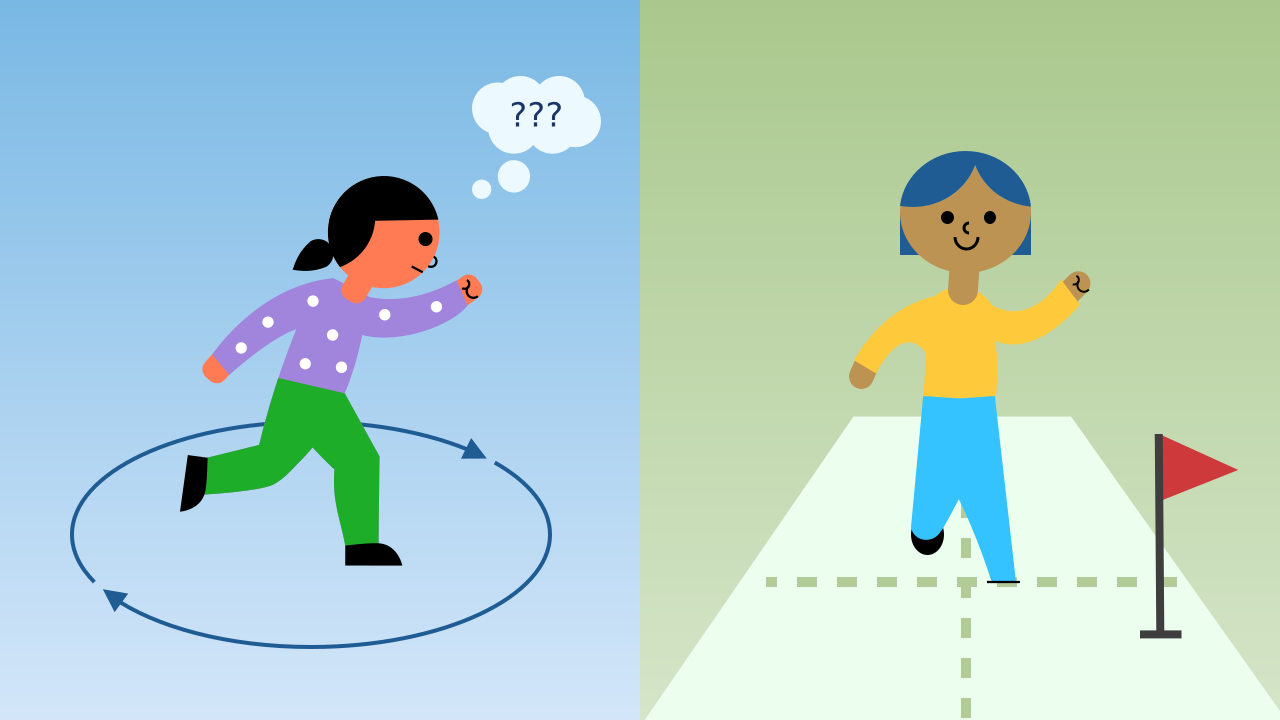
The for loop is great when you know the exact number of repetitions in advance (for example, "repeat 10 times" or "go through the 7 pixels in a row").
But in many cases, like a game with a random timer or waiting for someone to press a key, you have no idea how long it will take. You need a loop that can keep running while a condition is true, no matter how many repetitions that turns out to be.
The 'While' Loop (Repeat While)
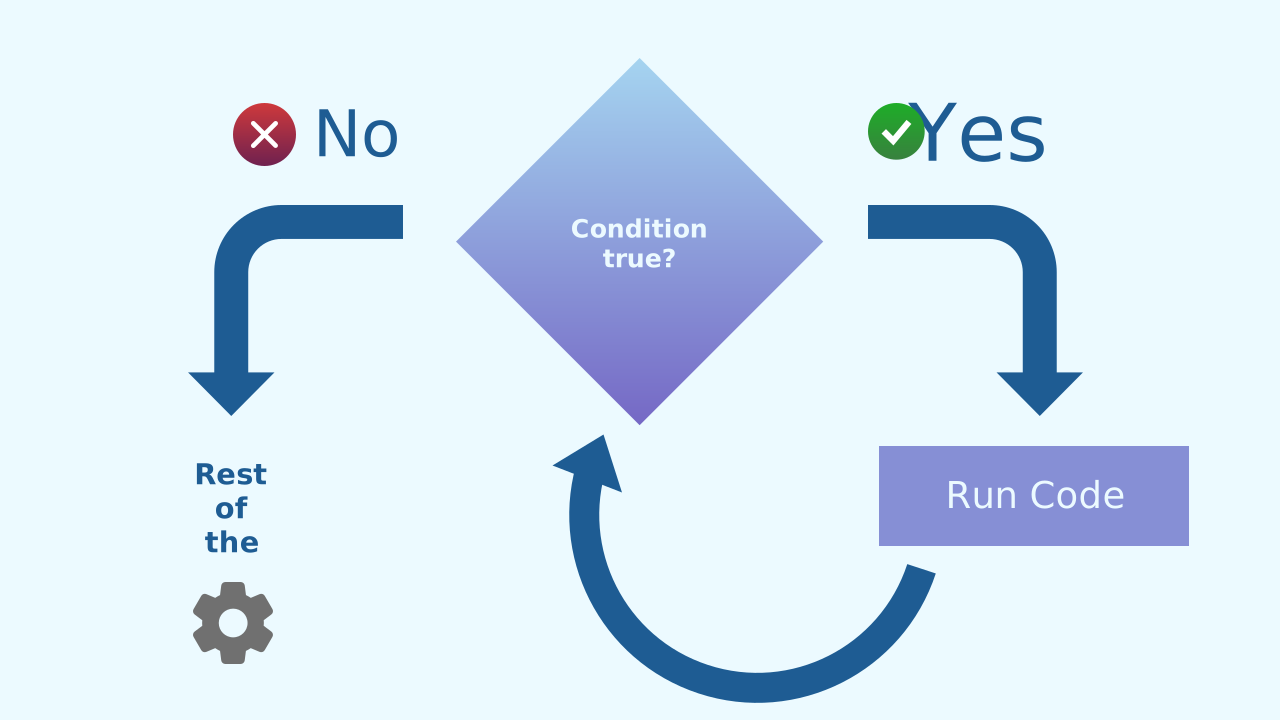
The "while" loop (or "repeat while") is the perfect solution for these cases. It works with simple logic:
- First, it checks a condition (for example,
is timeLeft > 0?). - While that condition is true, it runs the code inside it over and over again.
- On every repetition, it goes back to step 1 and checks the condition again.
- The moment the condition becomes false, the loop stops immediately and the program moves on to the next block.
The Logic of the Hot Potato
Our game combines several ideas you already know in a brand new way:
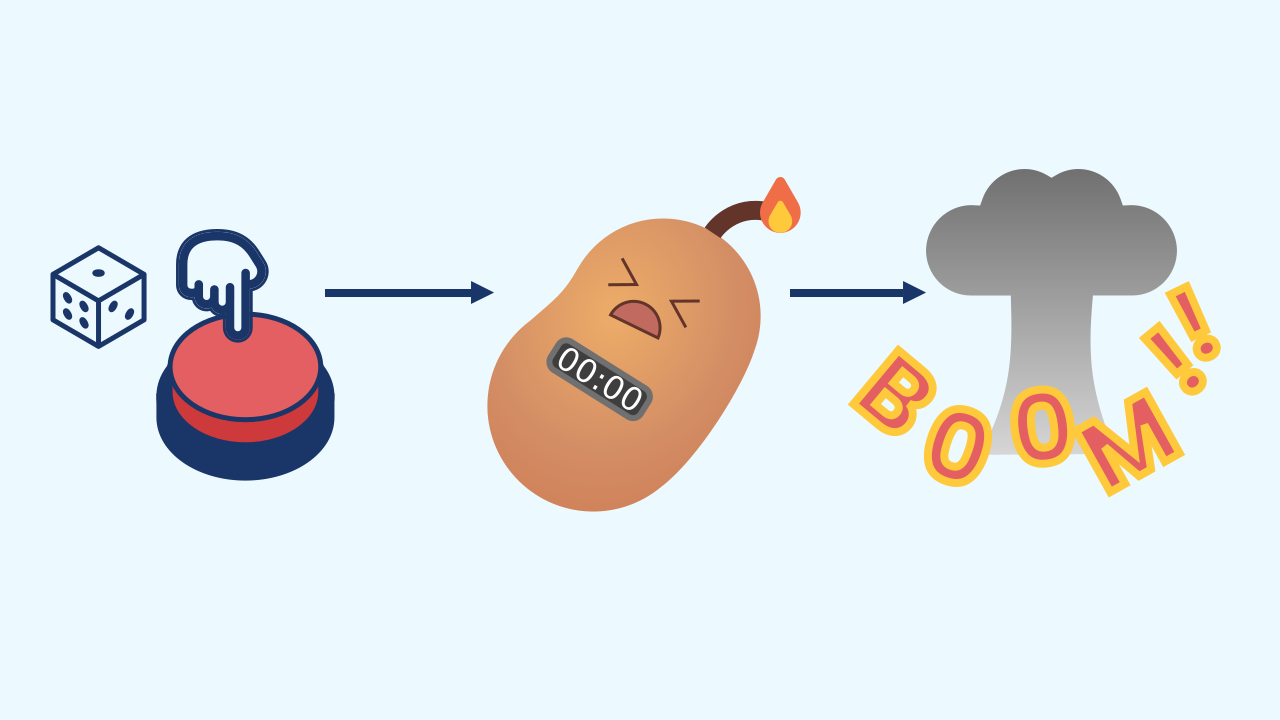
- Event: Pressing the screen starts a new round — if there isn't one already running.
- Flag: The
readyvariable remembers whether the game is free. It starts out true inwhen the program starts; the event only starts a roundif ready, and the first thing it does is set it to false, so a second touch can't restart the round in progress. - Variable and Randomness: The
timeLeftvariable stores a random number so that every round is unpredictable. - While Loop: The main game loop runs while
timeLeft > 0. Inside the loop, we subtract 1 fromtimeLeftevery second. - The End: When
timeLeftreaches 0, the loop's condition becomes false, the loop finishes, and the potato "explodes"!
Development (20-30 minutes) - Coding the Suspense
- Now that students understand the conceptual difference between
forandwhile, it's time to build the game. - Guide them through the instructions for creating the game, focusing on the structure of the 'while' loop and its stopping condition (
timeLeft > 0), as detailed below. It's crucial that they understand why this loop is the right tool for this job.
Closing (5-10 minutes) - The Right Tool for the Job
- Once everyone is passing the "hot potato" around, it's time for the final reflection on loops.
- Start the discussion: "Let's compare the tools we know. When would you use a 'for' loop? And when would you use a 'while' loop? Why was a 'while' loop perfect for this game, and why wouldn't a 'for' loop have worked as well?" (Because the remaining time is random and unknown when the loop starts).
Reflect
What is the main difference between a "for" loop and a "while" loop? Why was "while" the best choice for this game?
Inside a "while" loop, it's really important to make sure the condition eventually becomes false, so you don't get stuck in an infinite loop. Which block inside our loop guarantees that the game always ends?
What would happen if the random number could come out as 0? Would the game still work properly?
When You Don't Know When to Stop
The for loop is great when you know the exact number of repetitions in advance (for example, "repeat 10 times" or "go through the 7 pixels in a row").
But in many cases, like a game with a random timer or waiting for someone to press a key, you have no idea how long it will take. You need a loop that can keep running while a condition is true, no matter how many repetitions that turns out to be.
The 'While' Loop (Repeat While)
The "while" loop (or "repeat while") is the perfect solution for these cases. It works with simple logic:
- First, it checks a condition (for example,
is timeLeft > 0?). - While that condition is true, it runs the code inside it over and over again.
- On every repetition, it goes back to step 1 and checks the condition again.
- The moment the condition becomes false, the loop stops immediately and the program moves on to the next block.
The Logic of the Hot Potato
Our game combines several ideas you already know in a brand new way:
- Event: Pressing the screen starts a new round — if there isn't one already running.
- Flag: The
readyvariable remembers whether the game is free. It starts out true inwhen the program starts; the event only starts a roundif ready, and the first thing it does is set it to false, so a second touch can't restart the round in progress. - Variable and Randomness: The
timeLeftvariable stores a random number so that every round is unpredictable. - While Loop: The main game loop runs while
timeLeft > 0. Inside the loop, we subtract 1 fromtimeLeftevery second. - The End: When
timeLeftreaches 0, the loop's condition becomes false, the loop finishes, and the potato "explodes"!
Create
Let's play Hot Potato!
Build the cardboard model— you will also need a couple of rubber bands to hold the phone against the cardboard
- We'll need 2 components: TouchButton to act as our start button, and AudioPlayer for the suspense music and the sound effect.
- Make sure you have them ready in your workspace. You can open them in the same window.
We're ready to code the suspense!
Code Composition
Almost all of the game's logic lives inside the when ... is touched event, guarded by an if ready. First the flag goes to false, then a random timeLeft is drawn and the music starts. Then the repeat while timeLeft > 0 loop kicks in. It is crucial that inside the loop we change the variable that is being checked (with the change timeLeft by -1 block). If we forgot this step, timeLeft would never reach 0, the condition would always be true, and the loop would run forever!
Reflect
What is the main difference between a "for" loop and a "while" loop? Why was "while" the best choice for this game?
Inside a "while" loop, it's really important to make sure the condition eventually becomes false, so you don't get stuck in an infinite loop. Which block inside our loop guarantees that the game always ends?
What would happen if the random number could come out as 0? Would the game still work properly?